
Get an Instant Quote
What Is an Agreement of Purchase and Sale?
In Ontario real estate, the Agreement of Purchase and Sale—sometimes referred to as a purchase agreement or sale agreement—is the legal document that sets the terms for transferring ownership of a property from the seller to the buyer.
It's the most important document in a real estate transaction, and outlines the authority for the entire deal. Once signed by both parties, each side is legally obligated to follow its terms or face potential consequences such as losing the deposit or being sued for damages.
Most resale transactions in Ontario use one of two standard templates created by the Ontario Real Estate Association (OREA):
- OREA Form 100 (Freehold) – used for most detached, semi-detached, and freehold townhouse transactions.
- OREA Form 101 (Condominium) – designed for condominium units and includes additional sections for condo-specific matters like status certificates and common elements.
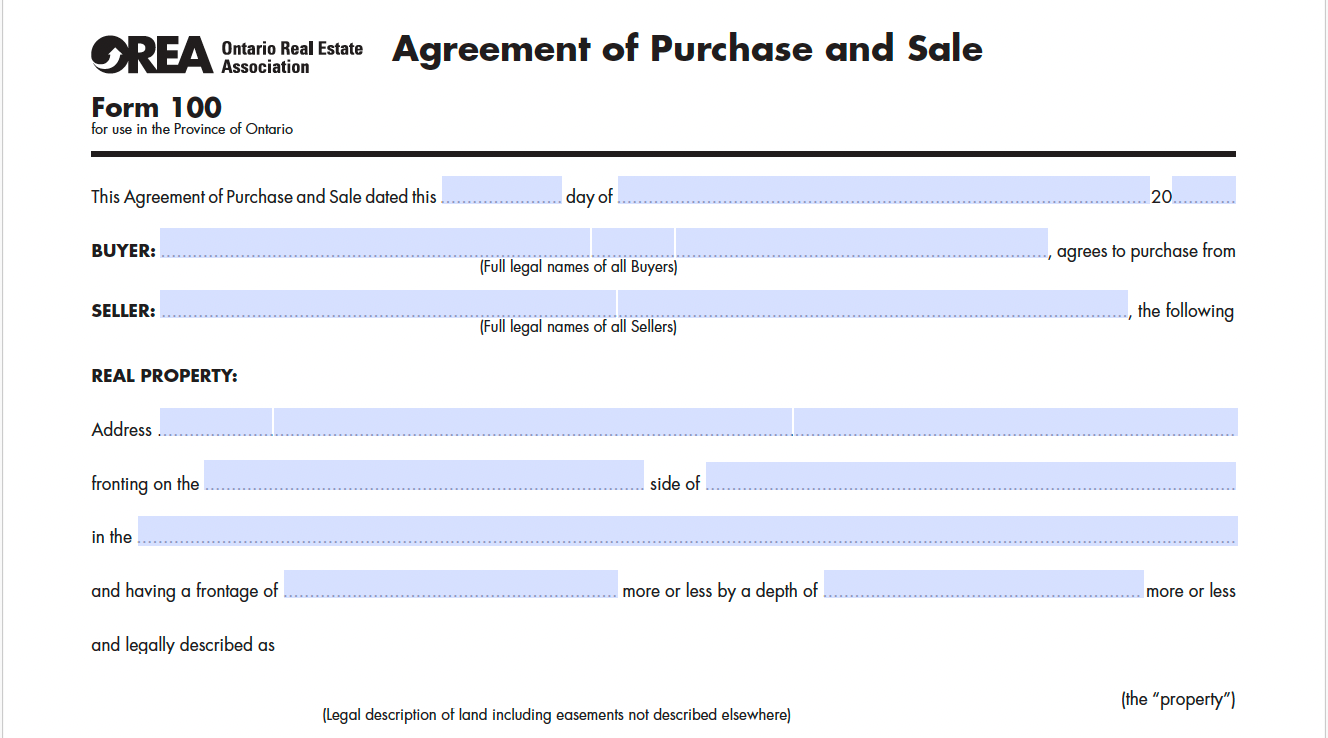
Together, these templates are known as the OREA Agreement of Purchase and Sale. They’re trusted because they cover all essential aspects of a deal, but they can—and often should—be customized to reflect the unique terms of each transaction.
There is no legal requirement to use the standard OREA Agreement of Purchase and Sale. A buyer and seller are free to create their own custom agreement, provided it complies with the principles of contract law and any applicable legislation governing the transfer of land in Ontario.
What Is Included in the Agreement of Purchase and Sale?
A purchase and sale agreement in Ontario follows a standard structure, but the details inside can vary greatly depending on the property and these will ultimately affect the closing process.
Below are the key sections you’ll find:
Purchase Price & Deposit
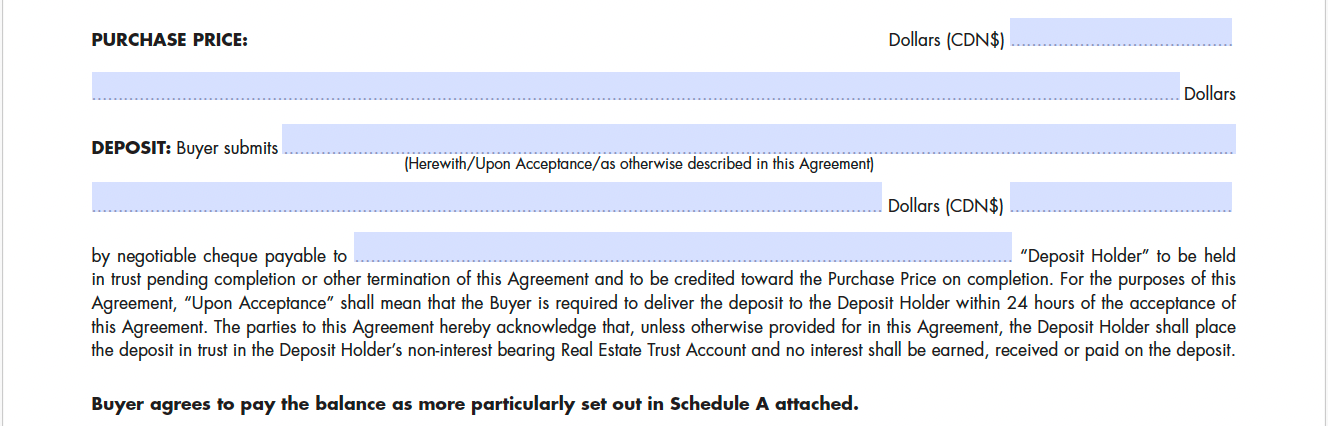
The purchase agreement always includes the agreed purchase price. This figure is the foundation for mortgage approvals, land transfer tax calculations, and other closing costs.
Equally important is the deposit amount—a good-faith payment from the buyer that’s usually 2–5% of the purchase price. The deposit is held in the listing brokerage's trust account until closing. If the deal doesn’t close due to certain conditions not being met, the deposit may be returned. But if the buyer defaults without justification, the seller may be entitled to keep it and pursue further damages.
Irrevocable Date

The purchase agreement will also state an irrevocable date and time. This is the deadline for the other party to accept the offer as written. If they don’t sign by this point, the offer expires and cannot be accepted later.
Short irrevocable periods can be used strategically in multiple-offer situations, while longer ones might be necessary when dealing with complex commercial transactions or international parties.
Get an Instant Quote
Completion Date

The completion date, often called the closing date, is when the deal is finalized. On this day, the funds are exchanged, the property’s legal description is confirmed in the transfer documents, and the buyer takes possession.
Choosing the right completion date is important. Too soon, and you may not have time to arrange financing or satisfy conditions. Too far out, and market conditions could change in ways that affect the deal.
Chattels and Fixtures
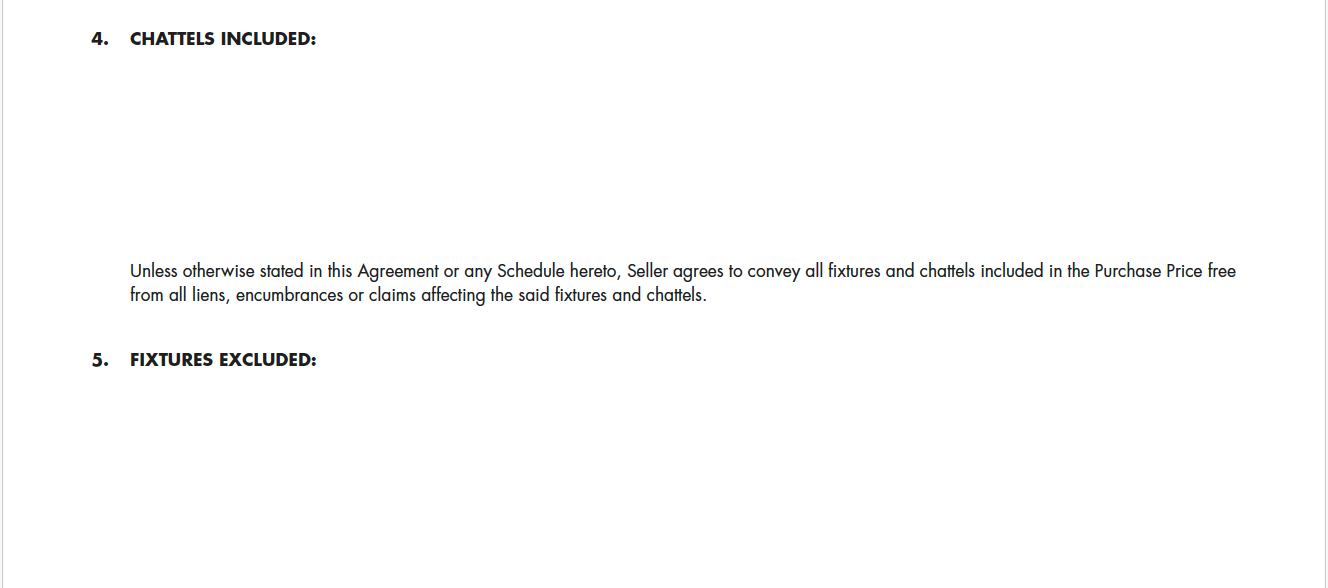
This section defines what’s included and excluded in the sale. Fixtures—things permanently attached to the property—are generally included unless excluded in writing. Chattels—movable items—are not included unless listed.
The purchase agreement should be very clear here. For example, a chandelier installed by the seller is a fixture, but if they intend to take it, the exclusion must be written into the agreement.
Get an Instant Quote
Rental Items
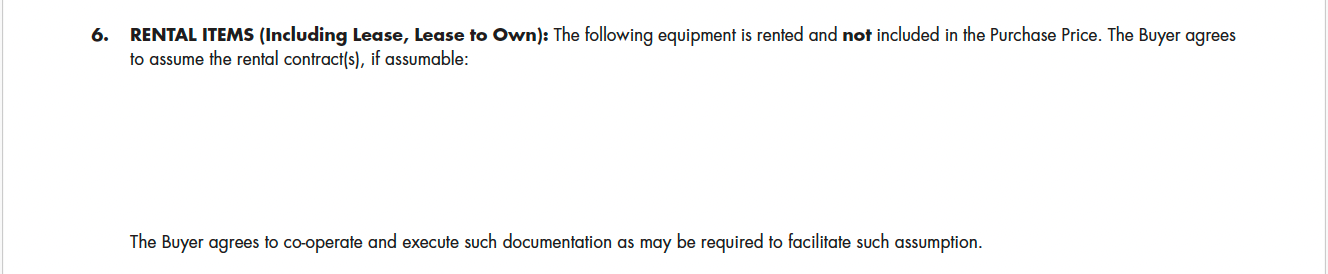
The sale agreement must identify any items on the property that are rented, not owned, such as hot water tanks, propane tanks, or alarm systems. The buyer must agree to take over these contracts, so transparency is essential to avoid disputes.
HST

HST applies to some transactions, such as newly built homes or certain commercial properties, but not typically to resale residential properties. When it does apply, the purchase agreement must clearly state whether HST is included in the purchase price or payable separately by the buyer.
Title Search Date

This date, also called the requisition date, is the deadline for the buyer’s lawyer to examine the property’s title. The search ensures there are no liens, easements, or ownership disputes that could interfere with the sale. Any issues must be addressed before this date or resolved in writing between the parties.
Schedules A
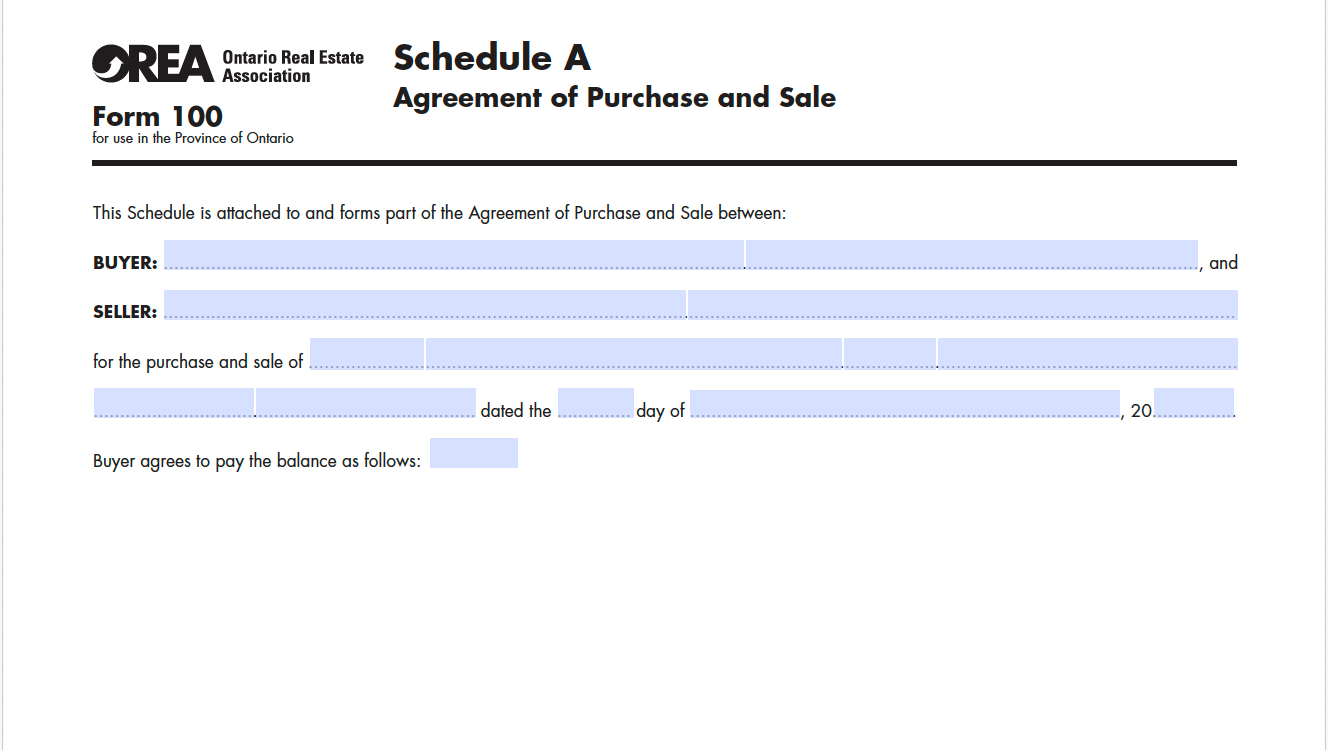
Schedule A in the purchase and sale agreement contains additional clauses that go beyond the standard form. This is where conditions like financing approval, home inspection results, or seller repair obligations are written.
Who Can Draft an Agreement of Purchase and Sale
In Ontario, a purchase agreement can be drafted by:
- Licensed real estate agents – They typically use OREA Form 100 or 101 and fill in the deal-specific terms.
- Real estate lawyers – A lawyer can prepare a fully custom legal document, add protective clauses, and ensure the agreement is enforceable.
- Unrepresented buyers or sellers – While possible, drafting your own agreement is risky without professional legal advice. Misused terms or missing clauses can result in serious financial loss.

Accessing the Form
The OREA forms are proprietary and available only to licensed Ontario real estate agents and legal professionals.
If you’re buying or selling privately, a lawyer can prepare the purchase and sale agreement for you as a custom legal document that meets Ontario standards.
Reviewing the Agreement of Purchase and Sale
Even with standardized forms, not all agreements are created equal. Poorly drafted terms or vague language can lead to misunderstandings, disputes, and even lawsuits. For example:
- Ambiguity about whether a fixture is included.
- An unrealistic completion date that causes a financing delay.
- Conditions written in a way that make them impossible to enforce.
A thorough review by your lawyer ensures the purchase agreement accurately reflects the deal you intended to make, closing potential loopholes before they become costly problems.
Get an Instant Quote
Summary
The purchase agreement—formally known as the Agreement of Purchase and Sale—is the legal backbone of every Ontario real estate deal. It sets out the purchase price, deposit amount, completion date, chattels, fixtures, rental items, HST obligations, requisition date, and even the property’s legal description. Whether you’re a buyer or seller, you should treat this document with the attention it deserves.
Having the agreement drafted or reviewed by a lawyer ensures your interests are protected, the OREA Agreement of Purchase and Sale is completed correctly, and your transaction is set up for success from the start through closing.
Contact Us
If you have questions about the Agreement of Purchase and Sale or any other real estate legal matter, we're here to help. As real estate law specialists, our mission is to provide the clarity and direction you need to protect your property rights.
Contact us today to schedule a free consultation.
Zachary Soccio-Marandola
Real Estate Lawyer
Direct: (647) 797-6881
Email: zachary@socciomarandola.com
Frequently Asked Questions (FAQ)
What happens if a condition isn’t met before closing?
If a condition—such as financing or inspection—is not fulfilled by the deadline in the APS, the agreement may become null and void, and the deposit is typically returned to the buyer.
Is the APS enforceable if I change my mind after signing?
Yes. Once both parties sign, the APS is legally binding. Backing out without a valid reason could result in losing your deposit and potentially facing legal action for damages.
What’s the difference between fixtures and chattels—and why does it matter?
Fixtures are attached to the property and are generally included unless excluded. Chattels are movable and only included if listed. Clarity here avoids disputes after closing.