
Get an Instant Quote
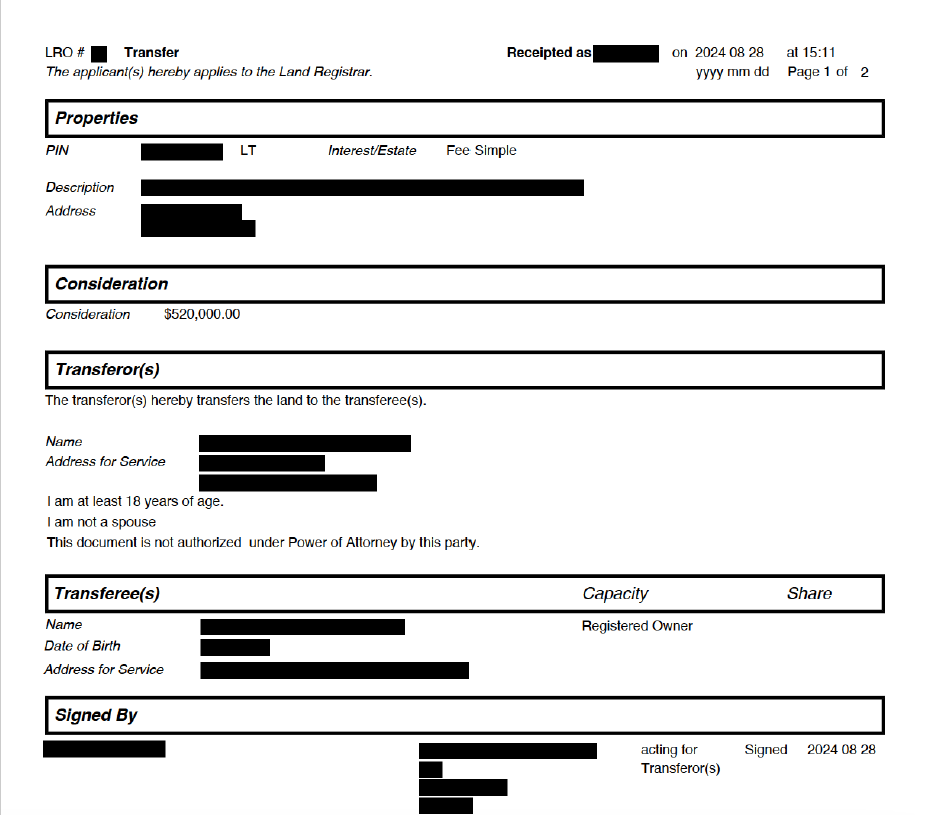
A property deed, or “Transfer”, is a legal document that transfers ownership from one party to another. A deed used in the Province of Ontario includes property identifiers (block and lot), consideration (e.g., money paid), property legal description, buyer and seller information, and other relevant details.
Signed and registered Transfers (deeds) are recorded in the Land Registry Office where the property is located. A title search can be completed using the Ontario Land Registration System, known as ‘OnLand.’ The registration process ensures government records are updated with the new owner’s information and transaction details.
Because a buyer isn’t legally the owner of a property until the deed is registered, a real estate closing lawyer is necessary. Zachary Soccio-Marandola represents clients in real estate law and transactions. He ensures that the necessary paperwork is finalized and due diligence is completed to protect the rights of his clients.
Here's what a property deed actually looks like in Ontario:
Get an Instant Quote
Types of Deeds Common in Ontario
In Ontario, a deed can be registered in two different ways when there are multiple owners. A deed can register the parties as Joint Tenants or Tenants in Common. This is indicated on the standard form Deed in Ontario, the “Transfer”.
These two primary types of property ownership structures reflected on a Transfer, carry distinct legal implications for how the property is conveyed and the rights of the parties involved in the transaction.
Joint tenancy deeds are commonly used when two or more people, such as married couples or family members, purchase a property together. In this arrangement, each owner retains their share of ownership, and upon the death of one owner, their share automatically transfers to the surviving owner(s) through the right of survivorship.
In contrast, tenants in common allows each owner to hold a specific portion or percentage of the property, without rights of survivorship. This means each owner can sell or transfer their portion independently, without affecting the other owners.
If a single individual is listed on the deed, it is referred to as “registered ownership.”
There are other types of deeds used in certain situations. For example, a transfer by personal representative is often used when a property is being transferred from an estate after the owner’s death. In this case, the personal representative of the estate transfers ownership, and the deed typically makes no guarantees or warranties about the property’s condition or use, as it is simply passing title from the deceased owner to the new owner.
More About Ownership Rights
Regardless of the type of deed, the rights of a property owner usually include the right to:
- Possession (ownership)
- Control (how a property is used)
- Exclusion (being able to stop a non-owner from using or entering a property)
- Enjoyment (using a property for enjoyment within the accordance of the law)
- Disposition (sell or transfer)
As part of a transfer of ownership, a lawyer will ensure that any mortgages or liens are paid off or otherwise satisfied so the new owner is not assuming any of the previous owner’s responsibilities. You can learn how to do a property title search in Ontario if you’re curious, but this is not necessary as a lawyer will handle that aspect for you as part of the transaction.
How Deeds Are Registered in Ontario
Transfer of title from one person or entity to another can be handled electronically in Ontario through the official land registration platform called ‘Teranet.’ This expedites the transfer and registration process from days to minutes.
A transfer can only be registered in Ontario by a lawyer. This requirement is meant to protect buyers and sellers involved in real estate transactions. Lawyers have the expertise to ensure that sales are legitimate and comply with relevant laws and regulations.
Get an Instant Quote
Summary
Buying and selling property in Ontario can be complicated. You want the deed you are acquiring to be accurate and recorded properly to protect your rights as an owner. A professional and experienced real estate lawyer can prepare a deed, ensure it is executed correctly, and record it on your behalf. They can also manage the other documents necessary in the transfer of a property, such as closing statements and mortgage documents.
Contact Us
If you have questions about the property deeds or any other real estate legal matter, we're here to help. As real estate law specialists, our mission is to provide the clarity and direction you need to protect your property rights.
Contact us today to schedule a free consultation.
Zachary Soccio-Marandola
Real Estate Lawyer
Direct: (647) 797-6881
Email: zachary@socciomarandola.com